Every student has a cognitive profile. Wadmore makes it visible.
A Cognitive Profile across eight independently scored domains for every student, with next-step strategies matched to each developmental level, and Pathways for secondary students. Structured evidence for responsive teaching, support, NCCD adjustment records and careers guidance.
Founding schools: Lock in $40 AUD + GST per student for three years, with on-site support for your launch, in exchange for feedback and a case study.
Recognition
You know your students.
Now you have structured evidence about them.
Teachers see these patterns every day. Wadmore can show whether a student's profile is consistent with one, and provides strategies grounded in the relevant research literature.
Two kinds of evidence
Every school holds two kinds of
evidence about a student.
One records what they've produced. The other shows the cognitive capability they're developing.
Artefact evidence
What the student produces. Valuable, rich, and now of unknowable provenance.
Capability evidence
Observable cognitive performance under known conditions. Observed as it happens, not handed in afterwards.
Artefact evidence remains valuable. It is no longer sufficient on its own.
Complete Coverage
Eight domains across three clusters
Reasoning with patterns, rules and sequences
Ideas generated and elaborated
Speed, memory, control and self-monitoring in action
What schools do with the evidence
Six applications, one platform.
Responsive Teaching
Understand the cognitive landscape of your classroom. Evidence about cognitive performance patterns to inform pacing, load and placement decisions.
Learning Support & Intervention
Add observed cognitive performance to the behavioural and achievement evidence you already hold. One more input to support planning.
Gifted and talented
Identify cognitive strengths across all eight domains. Evidence to support decisions about extension and enrichment.
NCCD Evidence
Structured cognitive performance data that can contribute to the evidence base for NCCD adjustment-level records, alongside your existing observational and achievement data.
Careers and Pathways
Pathways is the companion report to each profile: career areas worth exploring, subjects that keep options open, and ways to test the fit. Included in the $40.
Parent Conversations
Enrich parent-teacher meetings with structured, strength-based cognitive evidence. A shared language for discussing development.
The whole class, not only the child
The same assessment reads the cohort.
Teachers see their own classes. Leaders and learning support see the whole school. Every student is compared with the reference for their own age, and results are shown as counts of students, never as a ranked list.
For teachers
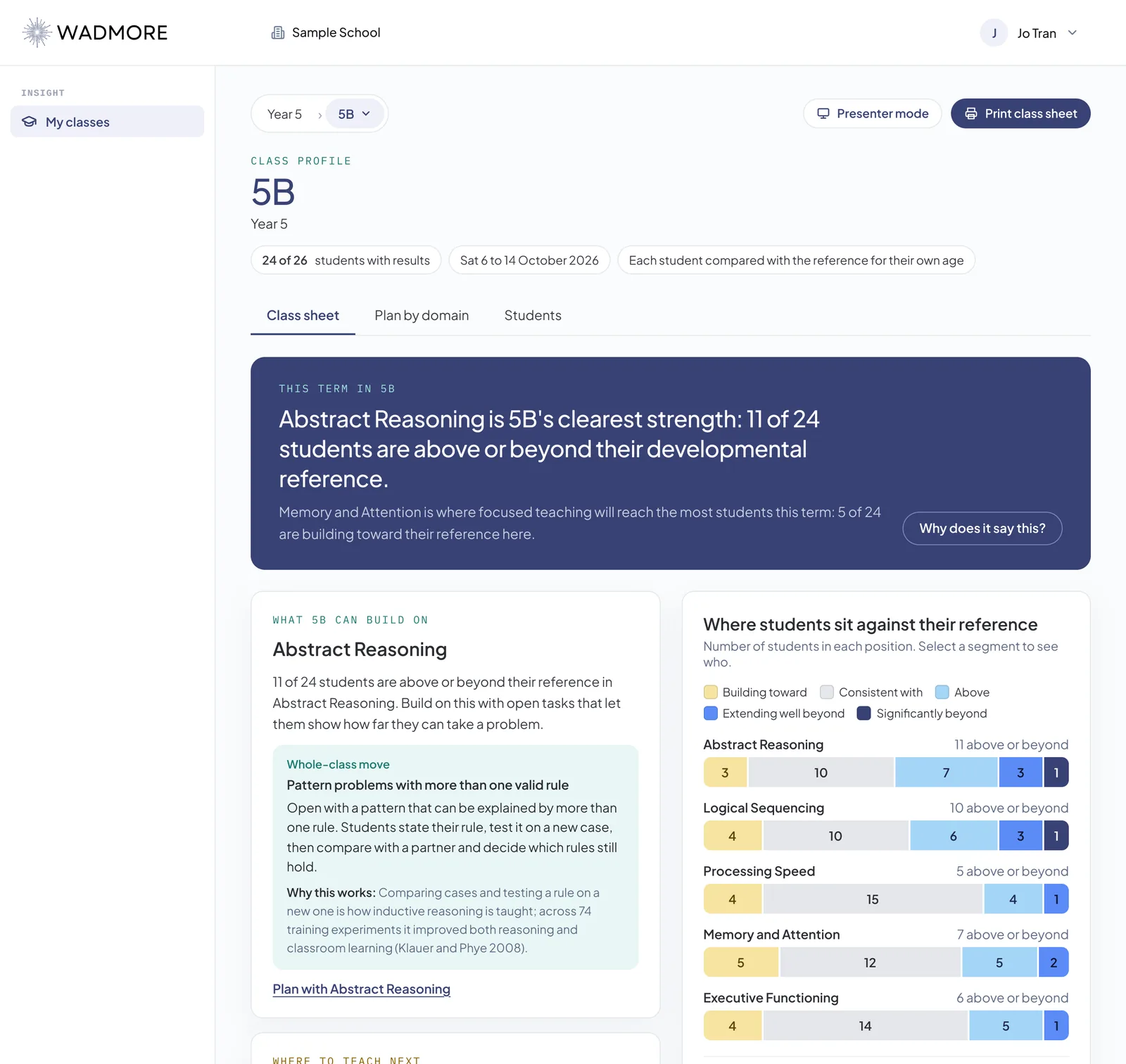
What this class can build on, and where to teach next.
The class sheet
The domain where the most students are above their developmental reference, and where focused teaching will reach the most students this term, each with a whole-class move and the research behind it.
Where students sit
For each domain, how many students are building toward, consistent with or above the reference for their own age. Select a segment to see who.
Plan by domain and by student
Strategies at the band each student is working in, a one-page summary per student, presenter mode for staff meetings and a printable class sheet.
For leaders and learning support
Where programs, staffing and professional learning could go next.
School overview
What stands out across year levels, and planning signals for extension, learning support and professional learning.
Review
Students extending well beyond their reference, and students building toward it in two or more domains, ready for a conversation with class teachers.
Reports and release
Release each parent report with a private link, withhold or revoke access at any time, and keep every release on record.
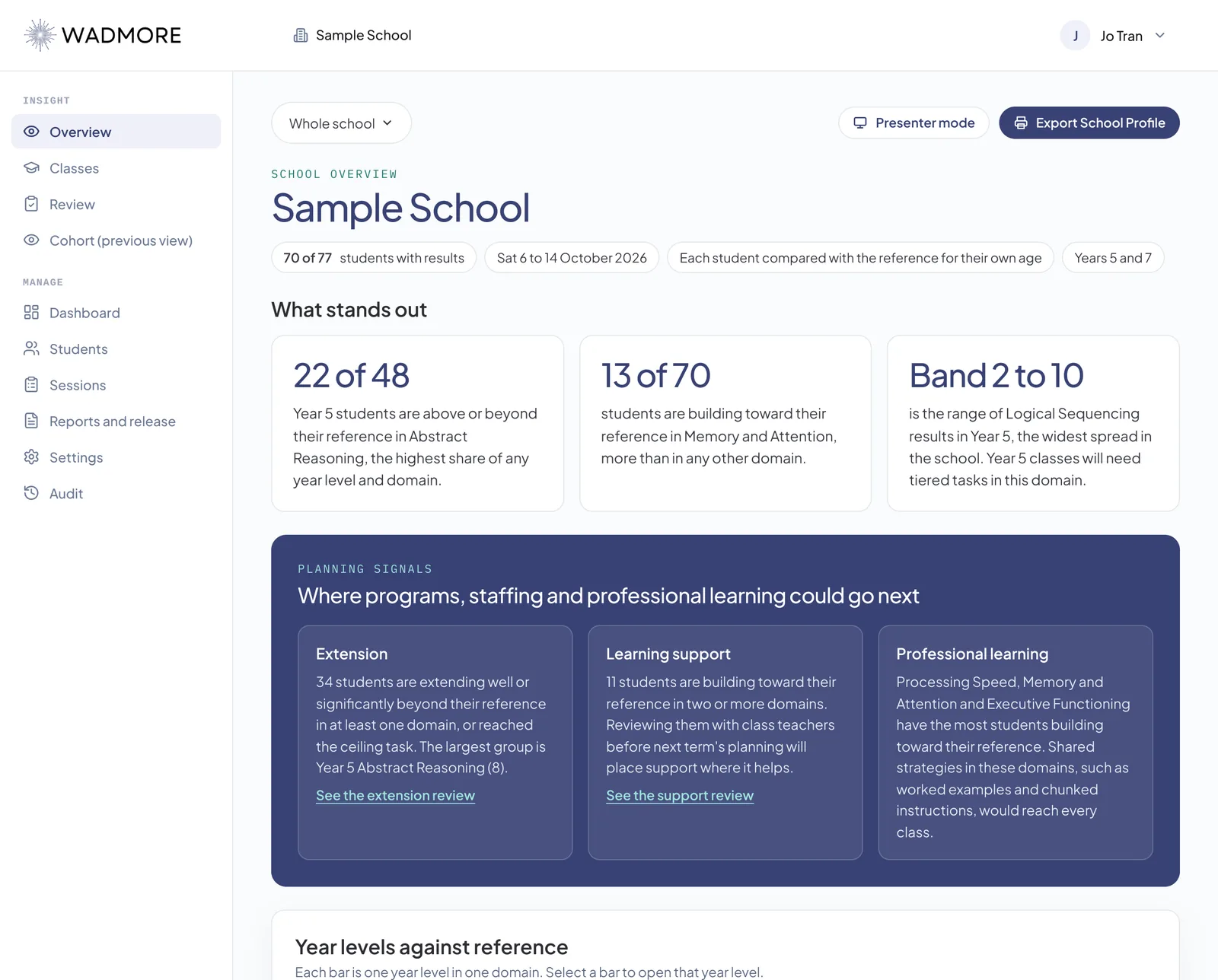
Sample school built from demonstration data. Groups smaller than five students are never shown.
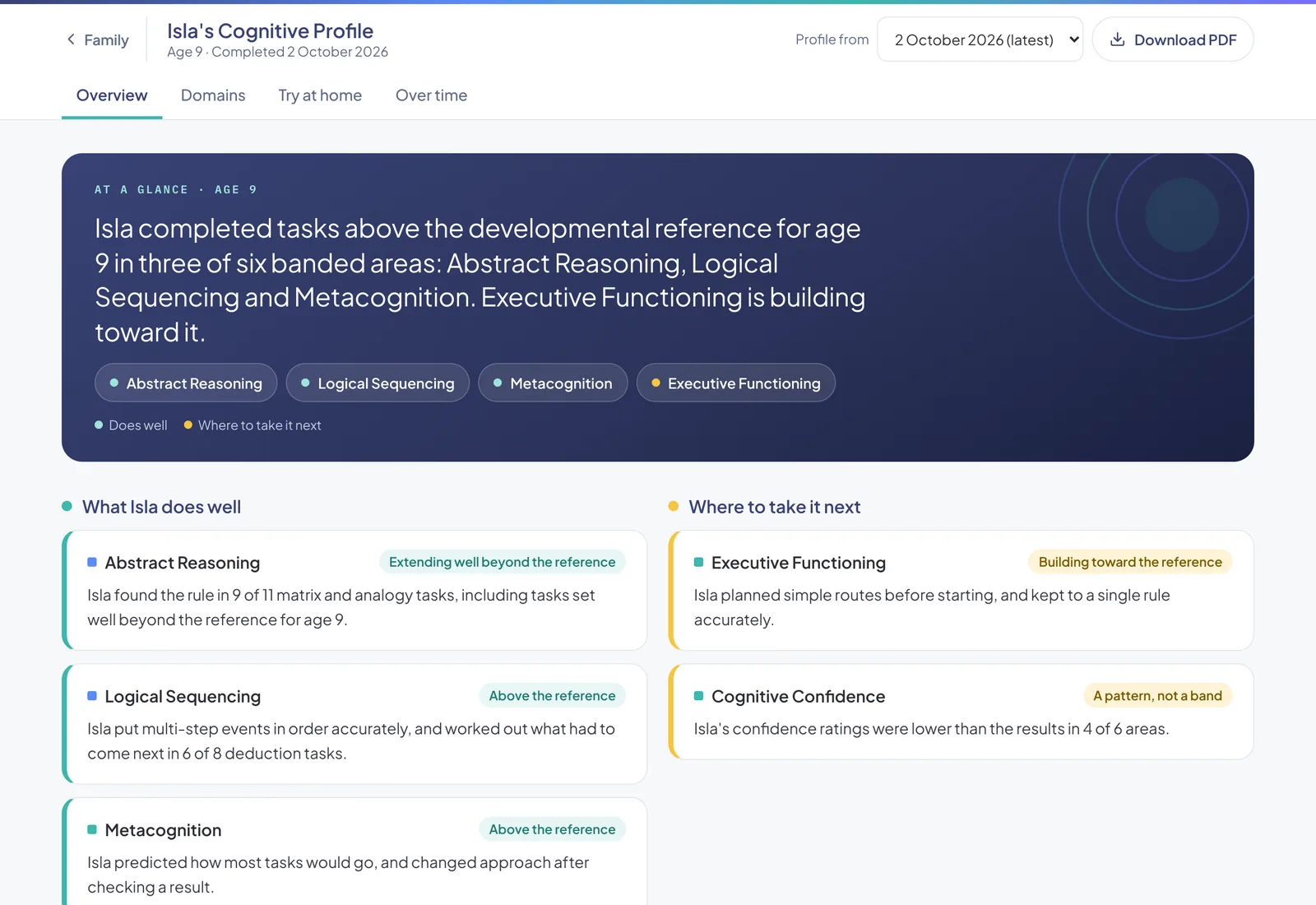
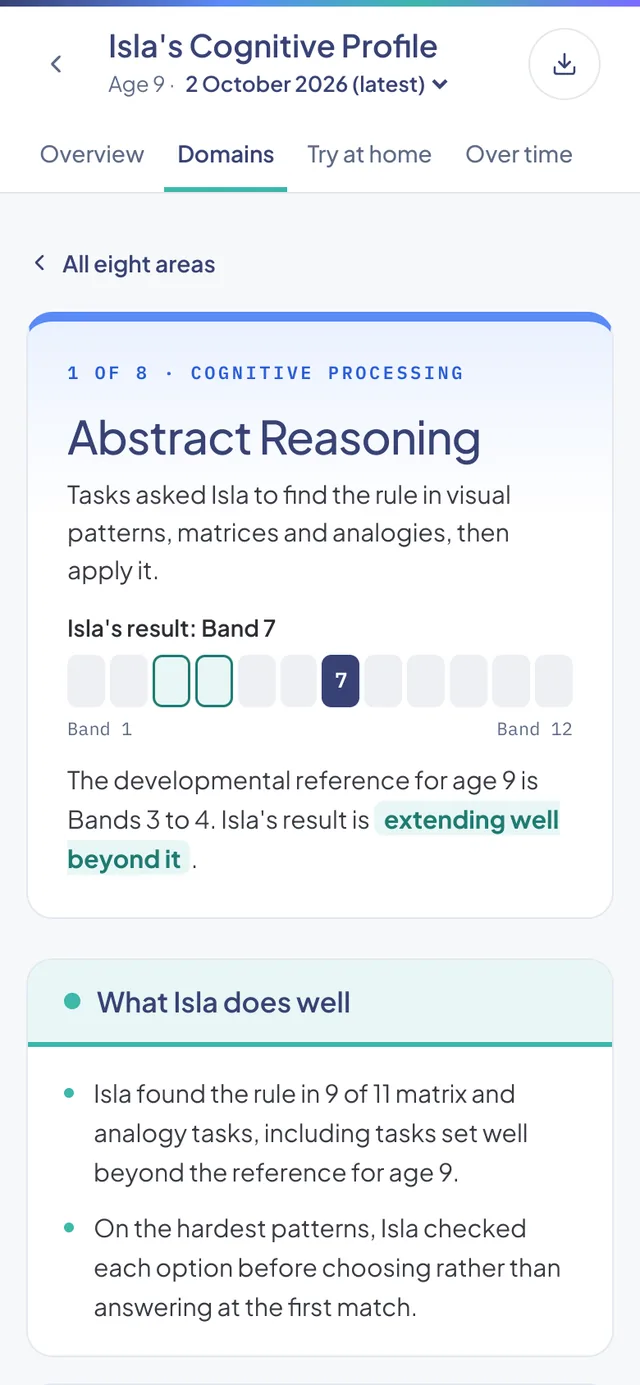
Inside a Wadmore Profile
What each student's profile shows.
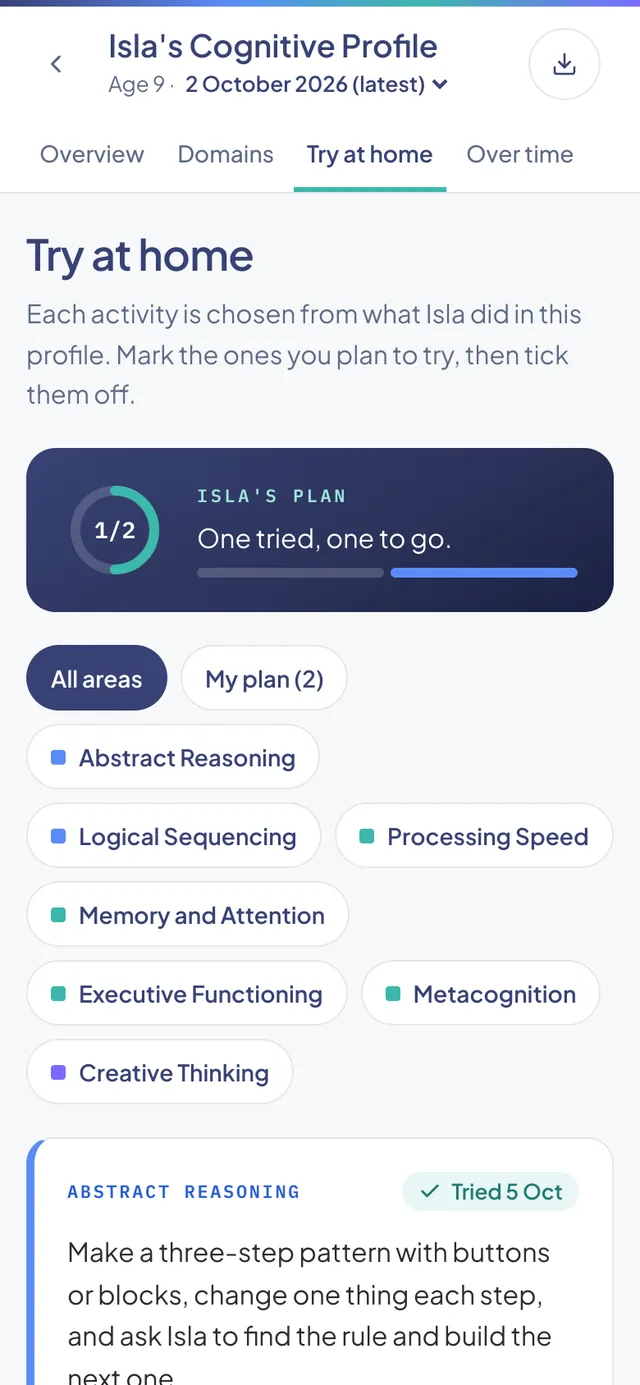
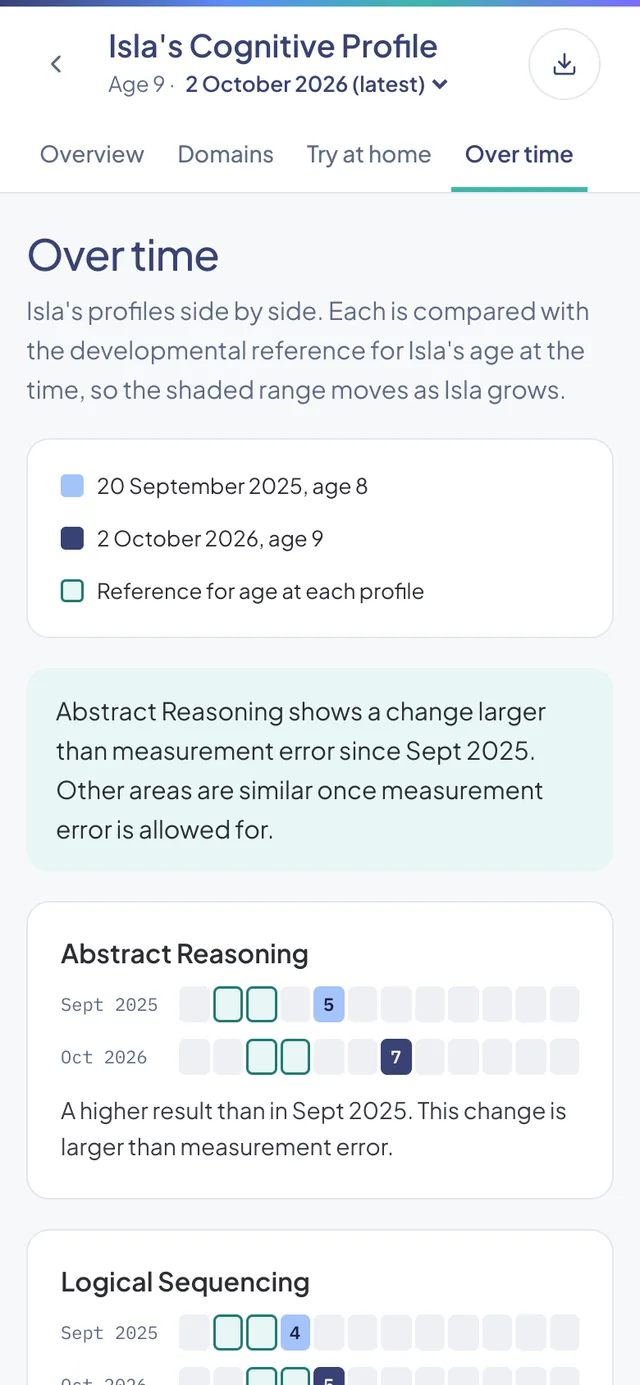
Every student assessed receives a Wadmore Cognitive Profile online and as a PDF. Each area is reported on its own and compared with the developmental reference for the student's age.
Designed for diverse learners
Including EAL/D students
Cognitive assessments can confuse language proficiency with cognitive ability. Wadmore items are systematically reviewed for linguistic accessibility. Where possible, cognitive measurement is designed to minimise the role of English language proficiency in the result, so EAL/D students are assessed on cognitive capability rather than language comprehension.
Design principle: Where a domain can be measured without relying on English text, it is. Where reading is required, items are written to minimise linguistic complexity without reducing cognitive demand.
Until now, this evidence cost a referral.
Typically $1,650 to $1,950 AUD per student, months deep. At that price it was rationed to crisis. Wadmore prices it as a whole-cohort instrument.
Every student. Not only the ones already struggling.
Pricing
One price per student
Everything included. No cohort minimum.
The eight-domain Cognitive Profile with strategies at each band, teacher class views, cohort views, and Pathways for secondary students. Re-measurement is recommended every two years at the same price.
Talk to us about your schoolFounding Schools
The $40 rate locked for three years and on-site support for your launch, in exchange for feedback and a case study. A small first group of schools.
Talk to usProfessional Learning
Optional professional learning for interpreting cognitive profiles and translating insights into classroom practice.
Learn moreReady to give every teacher cognitive evidence?
Founding schools lock in $40 AUD + GST per student for three years. Schools assessing in Term 1 2027 will have profiles ready when subject selection opens.